
Slow or blocked drain driving you crazy? Alassfar clears kitchen, bathroom & sewer drains fast — with hydro jetting, snaking & camera inspection. Call now.
You already know something’s wrong. The water sits in the sink for a few seconds before it moves. The shower pools around your feet. The kitchen drain makes that gurgling sound after you run the dishwasher. You’ve probably tried the bottle of drain cleaner from the hardware store. Maybe it helped for a week, maybe it didn’t do much at all.
Here’s the thing nobody tells you — that bottle doesn’t actually fix drains. It burns a temporary hole through whatever’s blocking the pipe and leaves everything else exactly where it was. The grease coating the walls, the hair mat sitting in the trap, the years of soap residue narrowing your pipe from the inside — all of it stays put. And a month later, you’re standing in the same spot wondering why it’s slow again.
We fix the actual problem. Not just the symptom.
Alassfar Drain Services LLC has cleared thousands of blocked drains — kitchen sinks caked with years of cooking grease, shower drains packed solid with hair, sewer lines choked with roots that had been growing undisturbed for a decade. We know what’s in there, we know how to get it out, and we know how to make sure it doesn’t come back next month.
Whether your unit broke down overnight, has been struggling for months, or simply hasn’t been serviced in years, our certified HVAC technicians have the experience and equipment to fix it right the first time.
Most people picture a drain clog like a cork in a bottle — one solid thing sitting in one spot. The reality is messier than that, and understanding it helps explain why professional drain cleaning works so much better than anything you can buy off a shelf.
Every time you cook, a small amount of grease goes down that drain. It doesn’t matter how careful you are — it happens with rinsing dishes, washing pans, running the garbage disposal. When that grease is hot, it’s liquid and it flows. But your pipes aren’t hot. A few feet into the pipe, that grease cools, and it sticks to the wall. Not all of it — just a thin film. Then the next rinse adds another thin film on top of that one. And the next. Over a year or two, that coating builds up enough to noticeably slow the drain. Over five years, it can cut the effective diameter of your pipe nearly in half.
The problem with liquid drain cleaners here is that they soften the top layer of that coating just enough for water to push through — but the coating is still there. Hydro jetting, on the other hand, physically removes it. The pipe comes out clean.
Hair is the main story in bathroom drains, and it’s a surprisingly stubborn one. Hair doesn’t dissolve — not in water, not in most drain cleaners. It catches on the drain’s stopper mechanism or on any rough spot inside the trap, and once it catches, it becomes a net. Every shower adds more hair to that net, which binds together with soap scum and conditioner residue into something with the consistency of felt. It doesn’t flush away. It has to be physically removed.
Your toilet’s drain is designed for two things: human waste and toilet paper. That’s genuinely it. Everything else — wipes (yes, even the ones labeled “flushable”), cotton rounds, paper towels, dental floss, feminine hygiene products — does not break down in your plumbing. These items accumulate in the bends of your drain line and in your sewer pipe, and over time they create blockages that no amount of plunging will resolve.
This is where individual drain problems converge into a whole-house problem. Your sewer line is the main pipe that all your drains ultimately feed into. When it gets compromised — by years of grease buildup, by tree roots finding a way in through a joint, by a section that’s shifted or settled over time — every drain in your house slows down or backs up simultaneously. This is also where the consequences get serious. A sewer backup doesn’t just mean a slow drain. It means sewage, coming back up through your floor drains or your lowest fixtures. That’s a health hazard, and it requires immediate professional attention.
We don’t have a single approach we apply to every drain. The right method depends on what’s in the pipe, how far down it is, and what the pipe itself looks like. Here’s how we think about it.
Before we recommend anything, we figure out what we’re actually dealing with. We’ll ask you some questions: Which drain? How long has it been slow? Does it drain eventually or not at all? Are other drains in the house behaving the same way? That last one matters a lot — multiple slow drains at the same time is a sewer line symptom, not a single-drain problem.
For drains that have been slow for a while, have backed up before, or where the cause isn’t clear from the surface, we can run a camera through the line. A high-definition waterproof camera goes into the pipe and sends back real-time video so we can see the exact condition inside — whether it’s grease buildup, a hair clog, root intrusion, a cracked section, or a foreign object. You see the footage. We explain what we’re looking at. No guessing.
 Posted on Google
 Jason Buerano
Trustindex verifies that the original source of the review is Google.
Joseph is very reasonable in pricing, he is a good man..Posted on Google Guillermo BeltreJoseph was very professional and did a great job. came and took care of my water heater on the weekend. Thank you Joseph I appreciate you.Posted on Google
 BadBoy BadBoyGreat service and great prices🧑🔧Posted on Google
 Ed JacqueGreat service. Very kind and fast.Posted on Google
 Anthony DeVitaCame for emergency at my house 5:30am. Fixed in 1.5 hours. It was a major clog. Nice gentleman and good service. Very fast. Second time I have used him and he is reliable.Posted on Google
 Jason ChangAmazing knowledge and incredible work on HVAC. Detected issue very quickly and resolved with accuracy and efficiency!Posted on Google
 Hector OsegueraAmazing work! Our pipes were frozen and he came through and handled it like a pro! Will definitely call again.Posted on Google
 Kamila DubiszAmazing work! I am a repeat customer! Reasonably priced, honest and knowledgeable. Everything you would want in a local professional.Posted on Google
 Matt LevineGreat service, and came very promptly despite being a busy night before a snow stormLoad more
A slow drain is annoying. A completely blocked drain is a crisis. And a sewer line issue somewhere between the two is often invisible until it becomes a serious problem. Whatever you’re dealing with right now — whether it’s something you’ve been ignoring for months or something that just happened this morning — we’ll diagnose it accurately and fix it properly.
For most standard residential clogs — a hair blockage in a shower drain, a soft grease mass in a kitchen sink, a foreign object that found its way into a toilet — a drain snake is the right tool. We feed a flexible steel cable into the drain, and a rotating head at the end breaks through the clog and pulls it out or breaks it up enough for the pipe to clear.
Snaking is fast, effective, and reasonably priced. It’s also not the right tool for everything. If grease has been building on your pipe walls for years, a snake punches a hole through the mass but doesn’t touch the coating. The drain will run better briefly, but you’ll be back to slow within a few weeks. In that situation, we’ll be upfront with you about it — and recommend what actually works.
If there’s a service that genuinely surprises homeowners who haven’t seen it before, it’s hydro jetting. A specialized nozzle connected to a high-pressure water line goes into your pipe. That nozzle shoots water in multiple directions simultaneously — forward, backward, and outward against the pipe walls — at pressures between 1,500 and 4,000 PSI. It doesn’t just punch through the clog. It scours the entire interior of the pipe clean, top to bottom, wall to wall.
Grease that’s been building for years comes off. Mineral scale gets blasted loose. The mat of debris sitting at the blockage point gets flushed completely downstream and out of the system. When we pull the hose out, the pipe is clean in a way it hasn’t been in a long time — sometimes in a way it’s never been since it was installed.
Hydro jetting is what we use when drains keep coming back, when a camera shows significant buildup, when a restaurant kitchen drain has been pumped full of grease for years, or when you want to do serious preventive maintenance before listing a home for sale.
One important note: hydro jetting is powerful, and it’s not appropriate for every pipe. We assess your pipes before we use it — particularly in older homes with cast iron or clay lines that may be in fragile condition. We adjust the pressure accordingly. We never apply maximum pressure to a pipe that can’t handle it.
If your camera inspection or your symptoms point to a main sewer line problem, that's a different conversation — and a different service. We handle sewer line cleaning and inspection as a dedicated service, and we can take you through what that involves if it turns out to be relevant to what you're dealing with.
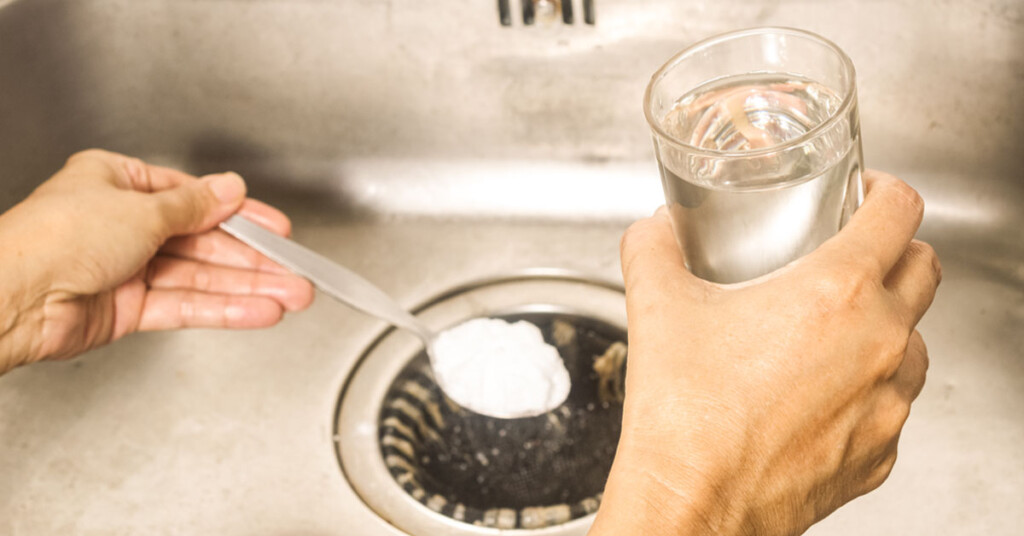
We get asked about this a lot, so let's be direct. Chemical drain cleaners — the kind you pour down the drain and let sit — work by generating a chemical reaction that produces heat and caustic agents. They can dissolve organic material that's loose enough and soft enough to react. That's genuinely useful for a mild, recent hair clog in a bathroom sink. The problems start when you're dealing with anything more serious, and when you start using them regularly: The chemicals don't remove buildup from pipe walls. They soften the surface just enough to create flow, and then the rest of the buildup stays in place and continues accumulating. You get temporary relief and a false sense that the problem is solved. Repeated use of caustic drain cleaners degrades pipe joints and can accelerate corrosion in older metal pipes. This is a slow process, but it's real — and it's why plumbers see so many older homes with prematurely deteriorated drain lines. They're genuinely dangerous to handle. Caustic drain cleaners cause serious chemical burns on contact with skin and eyes. If you pour one down a drain that's completely blocked and it has nowhere to go, it can splash back. And for physical blockages — a toothbrush cap, a child's toy, a clump of hair wound around a stopper component — they do absolutely nothing. You need something that can physically reach in and remove an object. Use them for what they're good for: light, recent, organic clogs where a full professional visit isn't warranted. For anything recurring, anything severe, or anything that involves your sewer line, call us.
Kitchen sinks and garbage disposals. Grease, food waste, and the slow creep of buildup that every busy kitchen produces. We clear it and we tell you honestly how bad it was — so you know whether it’s a once-every-few-years problem or something that needs more regular attention.
Bathroom sinks, showers, and bathtubs. Hair, soap scum, and the accumulation of daily use. These are often the fastest cleans we do — and also the ones where homeowners are most
Laundry drains. Washing machine drain lines deal with lint, fiber, and detergent buildup — and they need to keep up with the volume of water a modern washer moves. A slow laundry drain often becomes apparent when water starts pooling on the floor mid-cycle.
Main sewer lines. The drain that all other drains depend on. When this one has a problem, the whole house feels it.
surprised at what comes out of a drain they thought was fine.
Toilets. Partial blockages that make a toilet slow, sluggish, or prone to overflow. We identify whether the problem is in the toilet trap, in the drain line, or further into the sewer system.
Floor drains. Basement, utility room, garage, and laundry room floor drains are easy to neglect and essential when you need them. A clogged floor drain during a flood or a burst pipe event is a crisis on top of a crisis.
Commercial drains. Restaurants, food service operations, apartment buildings, office complexes. Commercial drain systems deal with loads that residential systems don’t, and they need a more frequent, more systematic approach. We work with property managers and business owners to set up cleaning schedules that prevent emergencies rather than responding to them.
No surprises, no runaround. Here’s exactly what happens when you call.
You describe the problem — which drain, how long, what you’ve tried, whether anything else in the house is running slow. We’ll ask a few questions because the answers change what we bring and what we expect to find.
We arrive in the scheduled window. We put on shoe covers before coming inside. Your floors stay clean.
We look at the drain before we quote you. We don’t give you a price over the phone for something we haven’t seen, and we don’t quote you a number and then add to it once we’re already there. The price we give you after the assessment is the price you pay — unless we open something up and find a situation that genuinely changes the scope, in which case we stop, explain it, and ask before proceeding.
We finish the job completely. We don’t stop when the water starts moving. We verify the line is clear, run water to test the flow, and check for anything else that looks like it’ll cause a problem soon.
We clean up before we leave. Drain work can be messy. We deal with that mess — not you.
A straightforward residential drain cleaning — one drain, a typical clog — is usually done in 30 to 60 minutes from the time we arrive. Hydro jetting a main line or camera-inspecting a longer run takes more time. We'll give you an honest estimate of how long your specific situation is likely to take.
Not with professional equipment and a professional who knows what they're doing. We assess the condition of your pipes before applying any high-pressure method and adjust accordingly. The pipe materials in your home — PVC, ABS, copper, cast iron in good condition — handle professional drain cleaning without issue. The only situation where we'd proceed differently is an old, fragile pipe that a camera inspection shows is already compromised.
Because last month's cleaning didn't address the root cause. If a drain comes back to slow within a few weeks of being snaked, there's typically one of two things happening: significant buildup on the pipe walls that snaking punched through but didn't remove, or a structural problem in the pipe that's causing repeated accumulation at the same spot. A camera inspection tells us which one it is, and from there we fix it properly.
Yes, and it matters. Older homes often have cast iron, galvanized steel, or clay drain lines. These can absolutely be cleaned — but we adjust our approach based on what we find. We don't blast a 4,000 PSI hydro jet through a 70-year-old clay pipe without first understanding its condition. Camera inspection before hydro jetting is standard practice for older plumbing.
Yes. Restaurants and food service kitchens, apartment buildings, hotels, and commercial office properties are all part of what we do. Commercial systems need more frequent service and a more systematic approach — we can set up a maintenance schedule that keeps drains flowing and avoids the kind of emergency that costs far more than prevention.
If one drain is slow or blocked, it's almost always a drain problem — localized to that fixture or the pipe immediately behind it. If two or more drains in the house are running slow or backing up at the same time, especially if they're on different floors or in different parts of the house, that points to the main sewer line. A sewer problem needs to be treated as a sewer problem — not as a series of individual drain cleanings that won't fix the underlying issue
We’re not in the business of generating unnecessary service calls. There are things you should do yourself, and things you should call a professional for.
Handle it yourself: A hair catcher that needs emptying from a shower drain. A pop-up stopper in a bathroom sink that needs to be unscrewed and cleaned. A garbage disposal that’s jammed and needs a reset (there’s a reset button on the bottom — most people don’t know it’s there).
Call us: Any drain that’s been slow for more than a couple of weeks. A drain that’s completely stopped. A toilet that drains slowly even after plunging. Multiple drains in the house running slow at the same time. Any sewage odor coming from drains or from outside the house near your cleanout. A drain that keeps clogging a few weeks after you cleared it.
The last one is important. A recurring clog is telling you something. It means the underlying problem wasn’t solved — either there’s significant buildup in the line that needs hydro jetting, or there’s a structural issue in the pipe that needs to be looked at. Repeated temporary fixes on a recurring clog are a waste of money compared to one proper diagnosis.
Alassfar Drain Services LLC 2026